Professional Development Programs
INTRODUCTION
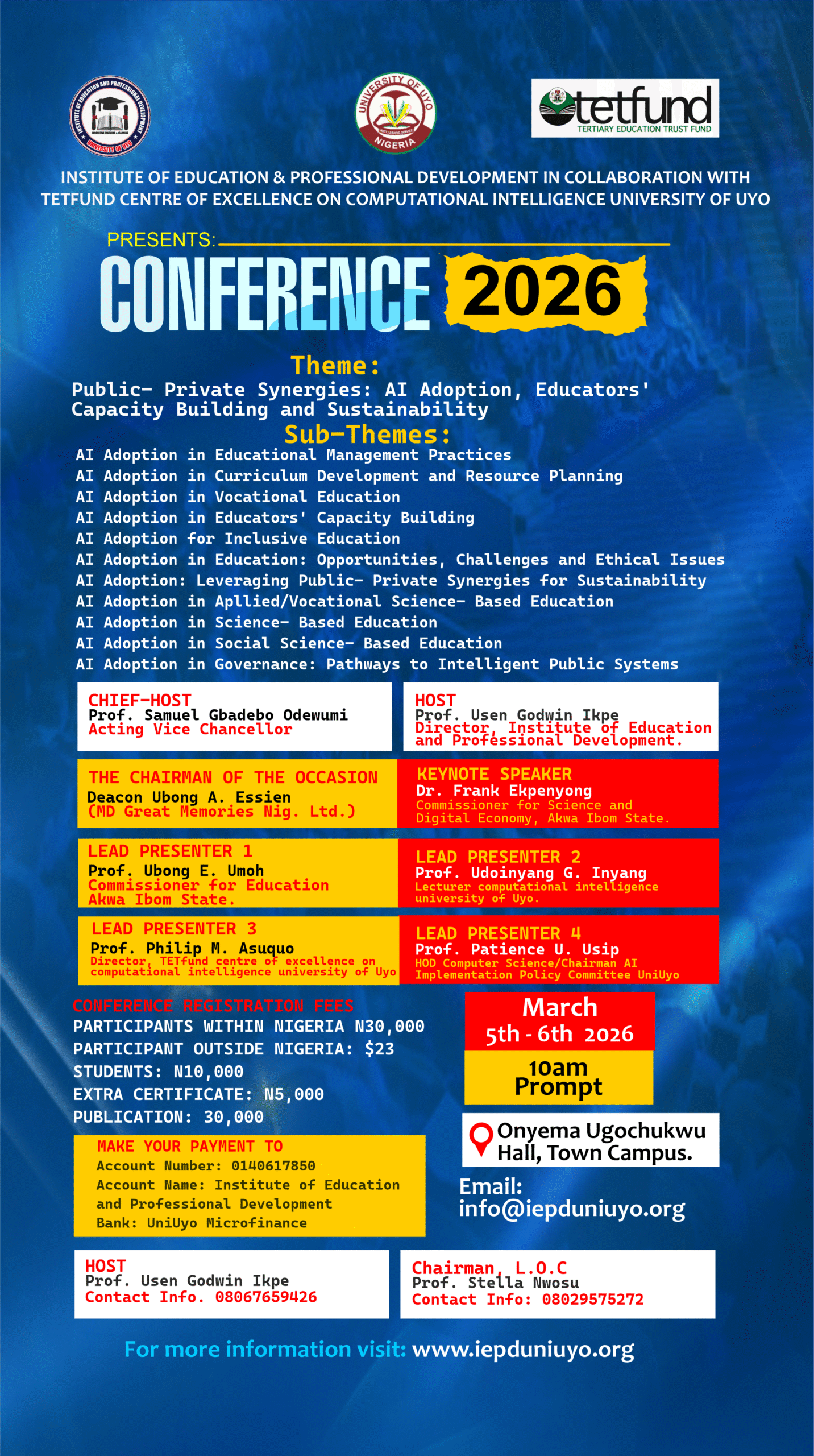
The pace of change in today’s world calls for stronger collaboration, innovative thinking, and deliberate investment in education. In response to this growing need, the 2-Day Conference titled “Public- Private Synergies: AI Adoption, Educators’ Capacity Building and Sustainability” is designed as a strategic platform for dialogue, partnership, and action.
This conference brings together policymakers, education leaders, researchers, private sector stakeholders, development partners, and students to explore how collective efforts can strengthen education systems and prepare educators for emerging demands. As digital technologies and artificial intelligence increasingly influence how knowledge is delivered and accessed, the role of collaboration between public institutions and private organizations becomes more critical than ever.
Over the two days, participants will engage in keynote sessions, panel discussions, technical presentations, and interactive forums focused on practical solutions for integrating AI responsibly, building sustainable educational frameworks, and enhancing the skills and competencies of educators. The conference will also examine policy, infrastructure, and investment approaches needed to ensure long-term impact and inclusivity.
A central focus of the conference is educators’ capacity building. Teachers remain the foundation of any successful education system, and empowering them with relevant skills, tools, and continuous professional development is essential for meaningful transformation. The event will highlight best practices, local and global experiences, and innovative models that support teacher development and institutional growth.
Beyond discussions, the conference aims to foster partnerships that extend beyond the event itself. It seeks to encourage collaboration between government agencies, academic institutions, technology providers, and industry leaders in order to develop scalable and sustainable solutions tailored to local realities.
Ultimately, this conference represents a shared commitment to shaping a future-ready education system; one that is inclusive, resilient, and driven by innovation and collaboration. Stakeholders are invited to participate, contribute, and join in building pathways that will strengthen education, empower educators, and create lasting value for society.
PURPOSE OF THE CONFERENCE
The conference seeks to strengthen collaboration that supports the responsible adoption of artificial intelligence, promotes sustainable educational systems, and enhances the capacity of educators to meet current and future learning demands.
By bringing together key stakeholders, the conference aims to bridge gaps between policy, practice, innovation, and implementation, while encouraging coordinated actions that will drive meaningful and lasting improvements in education and human capital development.
OBJECTIVES OF THE CONFERENCE
The specific objectives of the conference are to:
- Promote Public–Private Collaboration
Foster stronger partnerships between government, private sector organizations, educational institutions, and development partners to support innovation, resource sharing, and sustainable education initiatives.
- Advance AI Adoption in Education
Explore practical approaches, frameworks, and use cases for integrating artificial intelligence into teaching, learning, and educational administration in a responsible and ethical manner.
- Strengthen Educators’ Capacity
Enhance the skills, competencies, and professional development of educators through exposure to new tools, methodologies, and best practices relevant to modern education systems.
- Support Sustainable Education Systems
Discuss policies, funding models, infrastructure, and governance mechanisms that ensure long-term sustainability and scalability of education reforms and technology adoption.
- Encourage Knowledge Sharing and Innovation
Provide a platform for sharing research findings, case studies, and successful models from local and global contexts that can be adapted to improve educational outcomes.
- Influence Policy and Practice
Generate insights and recommendations that can inform education policy, institutional strategies, and private sector investment decisions.
- Build Networks and Partnerships
Create opportunities for networking, collaboration, and future partnerships among participants beyond the conference.
